

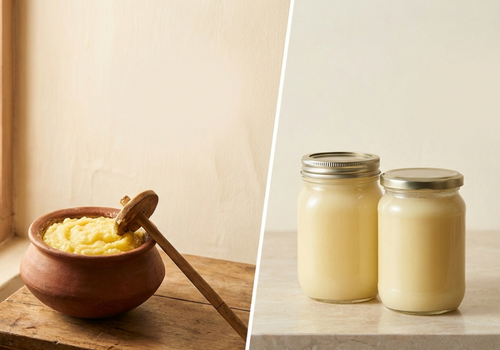
Ghee has been a part of Indian kitchens for centuries. But today, not all ghee is the same. You’ll often see terms like Bilona Ghee, A2 Ghee, and Desi Ghee — and it can get confusing.
In this article, we break down the real difference between Bilona ghee and regular ghee, how each is made, and why traditionally prepared ghee stands apart in taste and purity.
What is Bilona Ghee?
Bilona ghee is prepared using a traditional, two-step method:
- Fresh milk is set into curd overnight
- The curd is hand-churned to extract makhan (butter)
- The butter is slow-cooked on low heat to make ghee
This slow process preserves the natural aroma, texture, and flavor of ghee.
What is Regular Ghee?
Most regular ghee available in the market is produced using cream separation and industrial heating methods. This method is faster and suitable for large-scale production, but the process is quite different from traditional Bilona preparation.
Key Differences: Bilona Ghee vs Regular Ghee
| Feature | Bilona Ghee | Regular Ghee |
|---|---|---|
| Preparation Method | Hand-churned curd | Cream separation |
| Taste & Aroma | Rich, nutty, traditional | Mild, neutral |
| Production Scale | Small-batch | Mass-produced |
| Traditional Process | Yes | No |
Why Traditional Bilona Ghee is Preferred
People who grew up eating traditionally made ghee often notice:
- Better aroma
- Deeper, authentic taste
- Familiar homemade texture
This is why Bilona ghee is considered closer to the ghee made in our grandparents’ kitchens.
Final Thoughts
Choosing Bilona ghee is about choosing tradition, patience, and honest food practices. While regular ghee serves everyday needs, Bilona ghee offers a more rooted, artisanal experience.
👉 Explore traditionally prepared Bilona Ghee at Marwadi Farm.